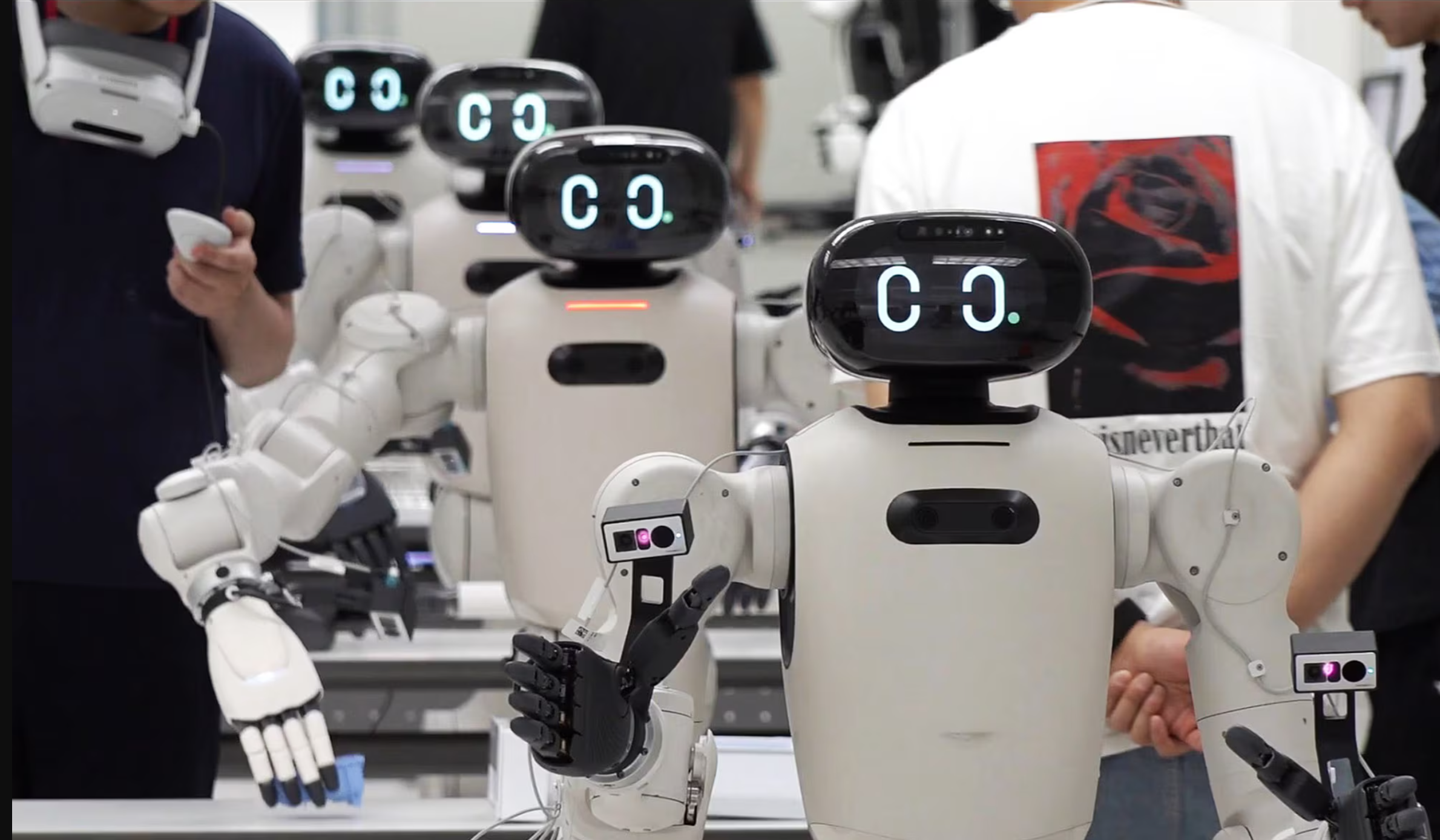
LG has given the future of domestic automation a remarkably direct name: the “Zero Labor Home.”
The phrase first appeared around a mobile smart-home AI agent able to navigate, communicate, sense environmental conditions, and control connected devices. At CES 2026, LG extended that vision with CLOiD, a home robot designed to coordinate appliances and perform chores including cooking and laundry.
This progression matters. Smart-home systems have traditionally automated products through software. Lights receive commands. Thermostats adjust temperatures. Washing machines report status. A robot with vision and arms introduces a second route: it can act on the physical controls, doors, containers, tools, and materials that already exist.
The robot therefore encounters the entire home as an interface.
A laundry task crosses several products and states. The robot finds garments, distinguishes materials, opens a machine, handles flexible items, measures detergent, selects a program, transfers wet laundry, and confirms completion. Each step depends on a different mix of perception, semantics, reach, dexterity, force, and feedback. Connected APIs can simplify some actions. Physical design still governs the rest.
LG’s advantage is ecosystem breadth. The company makes appliances, televisions, sensors, software, and robots. It can align the robot with the product. Most manufacturers have a different reality: their products will meet robots built by somebody else. Compatibility will depend on shared conventions and on product intelligence that can travel across platforms.
That changes the meaning of product readiness. A robot-ready appliance has geometry that supports reliable manipulation, visual and tactile cues that remain legible to machine perception, accessible digital state, and structured instructions that can be translated into action. It also has known failure modes. A robot must understand how to recover after a drawer jams, a garment slips, or a container is misplaced.
LG’s Zero Labor Home makes the strategic deadline visible. Once home robots become useful, consumers will expect them to operate the products they already own. The robot may become the layer through which appliances are chosen, used, and evaluated. Products that create repeated failures will lose preference inside both human and machine decision loops.
The domestic robot is arriving as an ecosystem. Product companies need a place inside it.
Hero image: editorial photograph. Official brand imagery and required credits are available via the sources above.
Ainsof independently analyzes how advances in robotics affect products, tools, and physical environments. Company names and trademarks belong to their respective owners. References to third-party products do not imply endorsement or partnership.