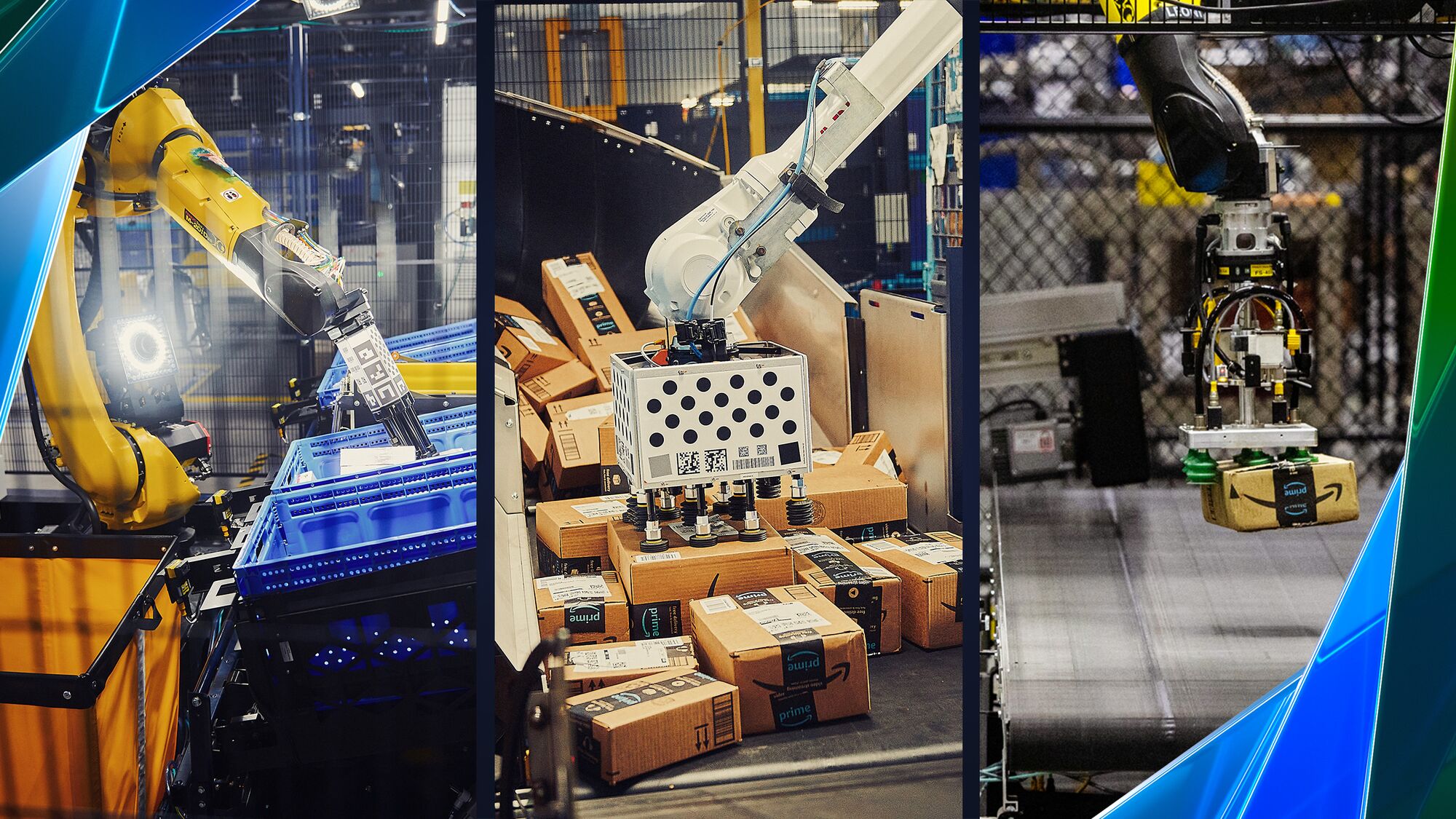
Walk through a modern AMAZON fulfillment center and the building behaves less like a warehouse than a city. Inventory moves through neighborhoods. Workstations act as ports. Containers carry identity. Robotic systems specialize in transport, storage, picking, sorting, and packaging.
AMAZON says it has deployed more than one million robots across its operations network. Systems such as Sequoia, Hercules, Titan, Proteus, Sparrow, Cardinal, and Vulcan divide physical work into coordinated layers. DeepFleet, AMAZON’s generative AI foundation model for its robotic fleet, is intended to improve movement across that network.
Scale exposes a central truth about robotics: the robot is only one component of performance.
AMAZON redesigns the surrounding system. Inventory arrives in known containers. Locations are structured. Workstations control access and height. Data tracks objects through transitions. Robots receive tasks suited to their bodies. This coordination reduces uncertainty and lets specialized machines deliver reliable throughput.
The products inside the system remain highly variable. They differ in size, weight, rigidity, texture, reflectivity, packaging, center of mass, and fragility. Robotic picking becomes harder when an item is transparent, deformable, densely packed, poorly labeled, or difficult to grasp. Packaging designed for a shelf and a human hand may create friction inside automated handling.
For brands, robotic fulfillment changes product performance before a consumer ever sees the item. Compatibility affects picking, stowing, sorting, packing, damage, and exception handling. A packaging change can create operational value across enormous volume. The most useful improvements may also benefit people through clearer identification, easier handling, and reduced material.
The same principle will spread beyond logistics. As robots enter stores, factories, kitchens, construction sites, and homes, environments will become partially structured around them. Manufacturers will need to decide how much adaptation belongs in the robot, the environment, the product, and the data connecting them.
AMAZON’s robotic city provides a preview. Physical AI scales when bodies, objects, information, and workflows are designed together.
Hero image: editorial photograph. Official brand imagery and required credits are available via the sources above.
Ainsof independently analyzes how advances in robotics affect products, tools, and physical environments. Company names and trademarks belong to their respective owners. References to third-party products do not imply endorsement or partnership.